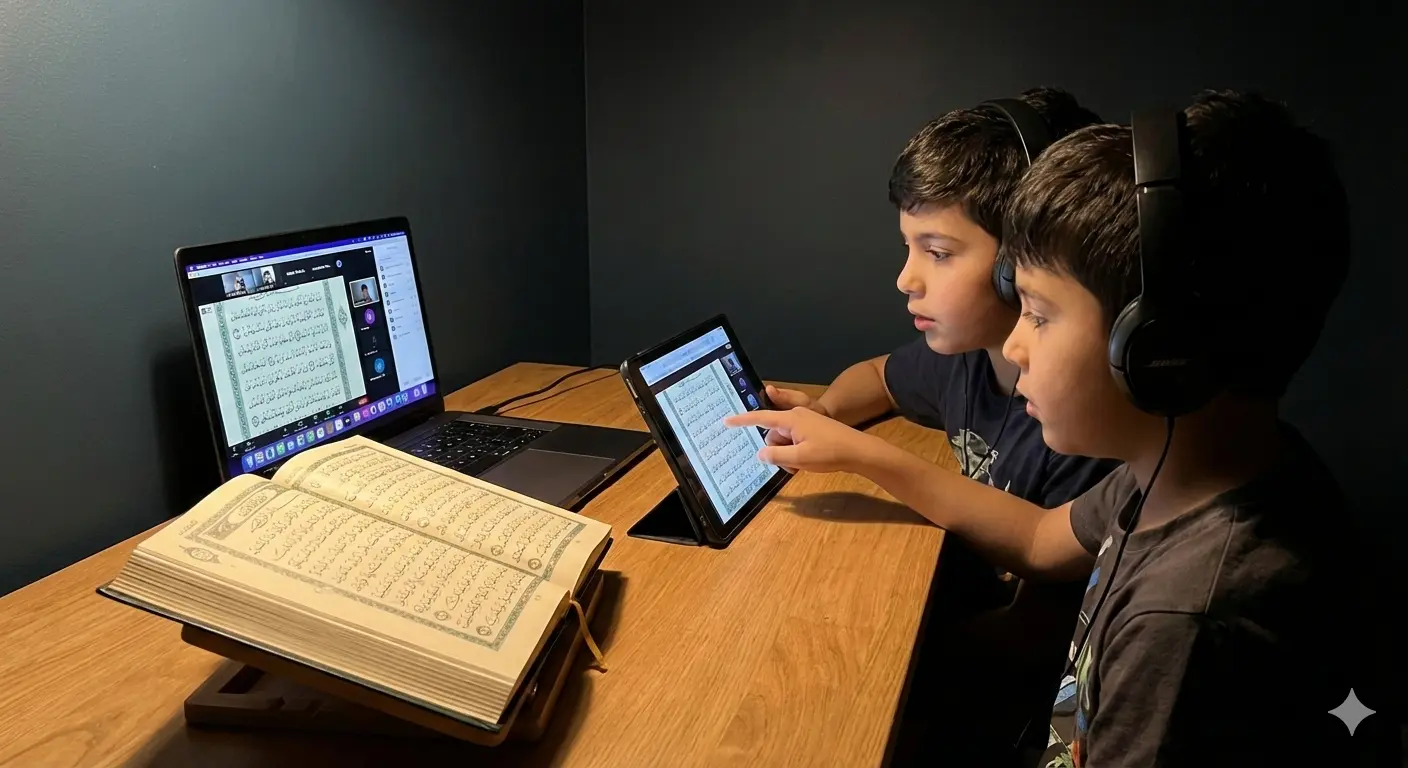
Buruj Academy’s Quranic Arabic Teachers bring Al-Azhar-level expertise to English speakers learning the language of the Quran online. These instructors don’t just teach vocabulary—they help students connect Arabic grammar to Quranic meaning, revealing how verb patterns, case endings, and root systems open a deeper understanding of Allah’s words. Every teacher is selected through rigorous interviews, testing both Classical Arabic mastery and the ability to explain complex linguistic concepts in clear, fluent English.
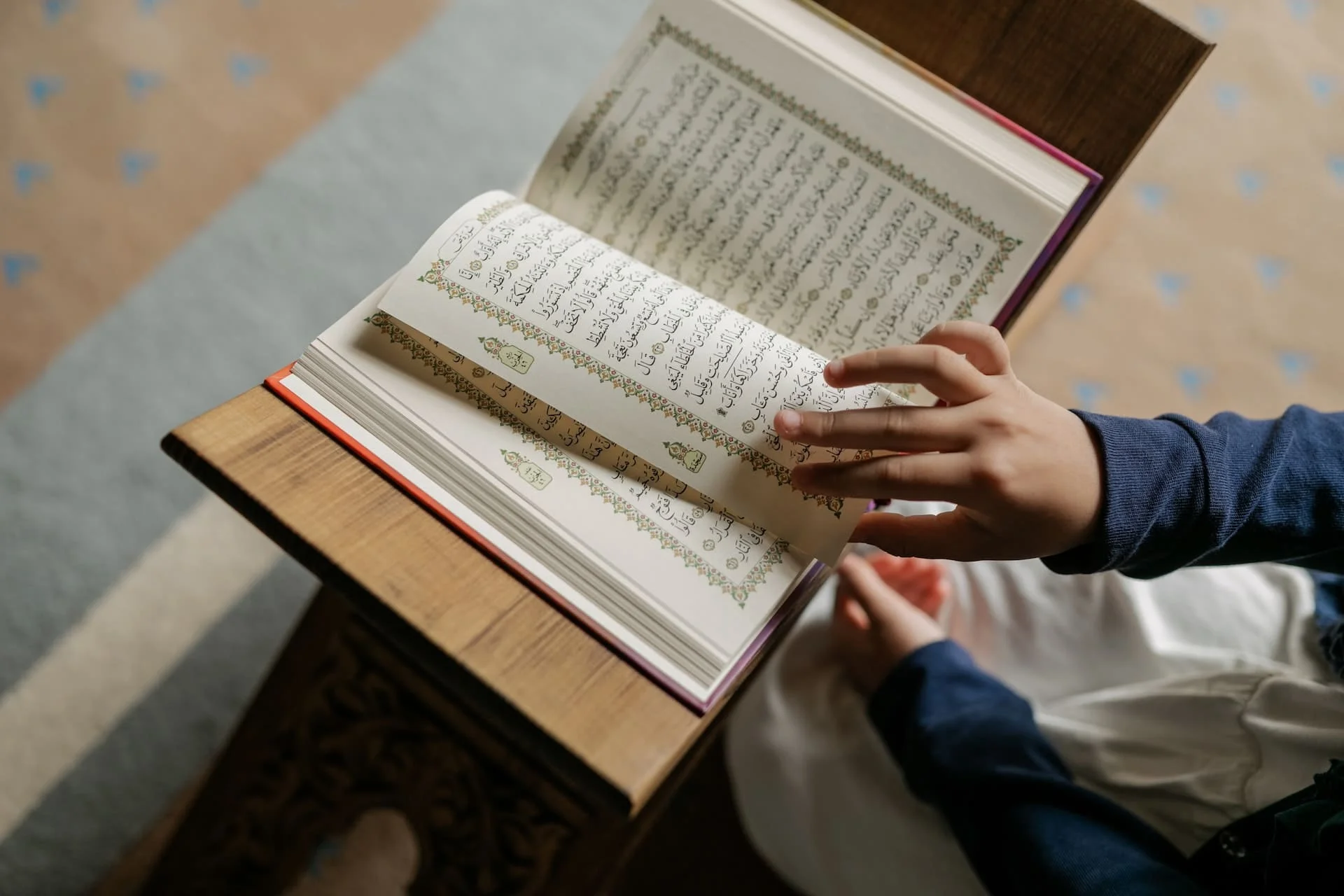
Buruj Academy’s Quran Arabic teachers don’t start with alphabet drills or generic dialogues. They begin where students’ real motivation lives—inside the Mushaf—teaching grammatical structures that immediately apply to verses students already hear in Salah, making every lesson feel relevant rather than abstract.

Transform from a complete beginner to a confident Quran reader
Buruj Academy’s Quranic Arabic teachers are trained specifically to serve English speakers who want to understand the Quran, not order coffee in Cairo. This means every lesson prioritizes Classical Arabic grammar structures over modern colloquial expressions. Instructors explain why certain Surahs use past tense to describe future events, how particles like إن and أن change meaning, and what grammatical patterns appear most frequently across Juz’ Amma, so students recognize them instantly during recitation.
Buruj Academy’s instructors must demonstrate they can explain why قرأ becomes يقرأ، قارئ، and مقروء through the same three-letter root—and do it in a way that doesn’t require students to already know linguistic terminology. This ability to translate complex morphology into plain English is what separates Buruj Academy’s Quranic Arabic teachers from tutors who simply assign exercises and hope students figure it out.
Every lesson with Buruj Academy's Quranic Arabic teachers builds toward one goal: students reading the Quran and understanding the Arabic directly, without waiting for translation footnotes.
Buruj Academy’s Quranic Arabic teachers introduce grammatical case endings (إعراب) not as abstract rules but as tools that clarify who’s doing what in any ayah. Students learn to identify the فاعل (subject), مفعول به (object), and حال (state) in short verses from Juz’ Amma first, where sentence structure is simpler.
Most English speakers struggle with Arabic verbs because they’re taught all ten forms at once, abstractly. Buruj Academy’s instructors show students these patterns inside verses they’ve memorized for years, so grammar becomes recognition rather than rote memorization. Only after Form I is internalized do lessons introduce derived forms like استغفر (seeking forgiveness) and تعلّم (learning thoroughly).
Buruj Academy’s Quranic Arabic teachers teach the three-letter root system as a discovery tool. Students learn that ع-ل-م generates عِلم (knowledge), عالِم (scholar), مُعلّم (teacher), and يعلمون (they know)—then scan Surahs to find these related words appearing in different forms. This isn’t vocabulary memorization; it’s pattern training. Instructors assign students a single root like ر-ح-م and guide them through finding رحمة، رحمن، رحيم، and يرحم across multiple Surahs, showing how Allah’s mercy is linguistically woven through the Quran.
Particles like ما، لا، إن، and لن appear constantly in the Quran, but their functions shift based on context. Buruj Academy’s instructors isolate these high-frequency particles and teach their rules through Quranic examples students already recognize.
Watch real testimonials from students who transformed their Quranic journey with us
Buruj Academy's Quranic Arabic teachers offer trial sessions where students parse actual Quranic verses, not textbook sentences.
Students working with Buruj Academy's Quran Arabic teachers online reach the moment where they're reading Tafsir Ibn Kathir and recognising the grammatical points being discussed, or listening to a Jumuah khutbah and catching the Arabic citations without waiting for translation.
Students begin noticing case endings while reciting Salah, identifying which words are subjects, objects, or descriptors without pausing to translate. This happens after Buruj Academy's instructors train students to hear the final vowel patterns Grammatical awareness becomes automatic, transforming recitation from sound repetition into meaningful comprehension.
When students encounter an unfamiliar word in a new Surah, they no longer freeze—they extract the three-letter root and make educated guesses about meaning based on patterns they've internalized. Buruj Academy's curriculum builds this skill by assigning root-recognition exercises across multiple Surahs, so students learn to see س-ج-د in ساجدين، مسجد، and يسجدون, connecting all these words to the concept of prostration. This decoding ability makes independent Quran study sustainable long after lessons end.
Students stop depending entirely on English translations because they understand what the Arabic actually says. Buruj Academy's Quranic Arabic teachers show students why translators make different choices—how the Arabic verb أنزل can be translated as "sent down," "revealed," or "bestowed" depending on context, but the root ن-ز-ل always carries the sense of descent. This grammatical literacy helps students compare translations critically and recognize when English can't fully capture Arabic nuance.
Advanced students begin accessing classical Tafsir works and Hadith collections in Arabic, no longer limited to what's been translated. Buruj Academy's instructors prepare students for this by gradually introducing the grammatical terminology used in Islamic scholarship—teaching not just what حال means (state/condition) but how scholars reference it when discussing a verse's grammar. Students learn to recognize these terms in Arabic footnotes and commentary, making authentic Islamic texts accessible rather than intimidating.
Parents studying with Buruj Academy's Quranic Arabic teachers often reach a level where they can explain simple grammatical concepts to their children—pointing out the subject of a verse, explaining why a word ends with a certain vowel, or showing how two words share the same root. Buruj Academy's teaching model emphasizes understanding over memorization, so students internalize
Learn from qualified native Arab scholars with years of teaching experience
Qur’an & Islamic Studies Teacher for Non-Native Speakers
4+ years experience | 1,500+ teaching hours | Tajweed & Qur’an Instructor | Kids & Adults
Qur’an & Arabic Teacher for Non-Native Speakers
17 years experience | Al-Azhar Teacher | 3,000+ hours with non-native students
Qur’an, Arabic & English Teacher
2,600+ teaching hours | Teaching Qur’an & Tajweed simply | Arabic & English Instructor | Kids & Adults
Qur’an & Arabic Teacher for Non-Native Speakers
2+ years experience | 2,000+ teaching hours | Tajweed & Noor Al-Bayan Specialist | Multilingual Instructor
Real transformations from students who mastered the Quran with our courses
Buruj Academy doesn’t hire Arabic teachers and hope they can handle Quranic content. Every instructor is selected specifically for their ability to teach the grammar, vocabulary, and linguistic structures.
Buruj Academy's hiring process tests whether candidates can explain verb conjugations, case endings, and root morphology in plain English without relying on Arabic-only terminology.
Buruj Academy's Quranic Arabic curriculum doesn't follow generic Arabic textbooks designed for conversational fluency; it isolates the grammatical structures most frequent in the Quran and teaches them in order of usefulness.
Some students want to understand Salah verses perfectly. Others aim to read Tafsir in Arabic. A few want to study Hadith collections without translation. Buruj Academy's Quranic Arabic teachers adjust pacing, materials, and focus based on each student's target.
This approach makes every grammar lesson feel immediately relevant. Students aren't waiting to apply what they've learned to the Quran someday; they're applying it in the same lesson, seeing familiar verses with new grammatical clarity.
Every lesson includes parsing exercises where students identify subjects, objects, verbs, and particles in actual Quranic ayat. Buruj Academy's teachers don't assign abstract drills; they assign verses from Juz' Amma or Surah Al-Baqarah and guide students through grammatical analysis step-by-step.
Buruj Academy's Quranic Arabic teachers offer sessions in multiple time zones, accommodating professionals studying before work, parents learning after children sleep, and students in non-Muslim-majority countries with limited local resources.
Buruj Academy's pricing reflects a commitment to accessibility—students receive Al-Azhar-trained instruction and a curriculum built for Quranic comprehension at rates significantly lower than university Arabic courses or private tutoring.
Buruj Academy’s Quranic Arabic teachers help English speakers move from reading the Quran phonetically to understanding it grammatically, one verse at a time.
✓ Cancel anytime · ✓ No hidden fees · ✓ 100% satisfaction guarantee
Common questions about studying Quranic Arabic online with Buruj Academy's specialized instructors, curriculum approach, and personalized learning plans.