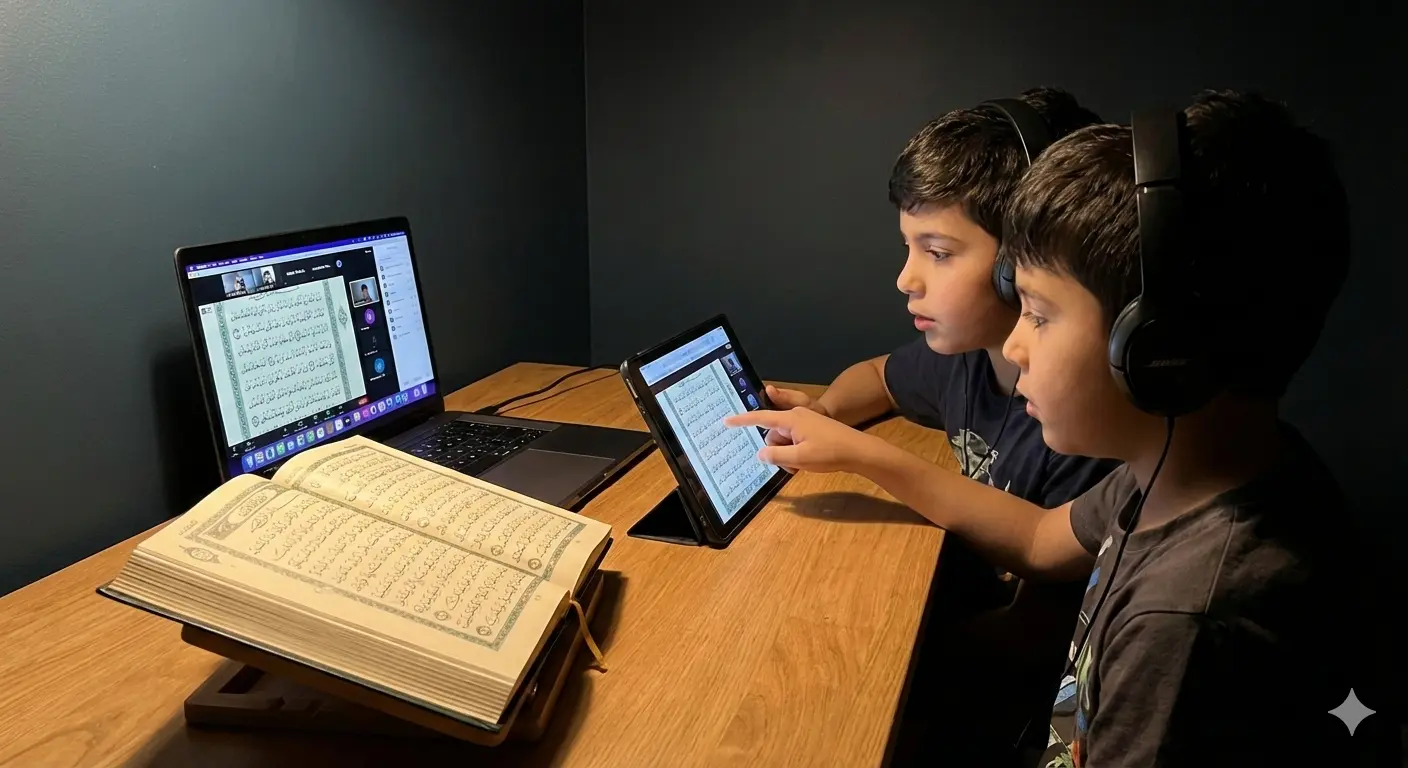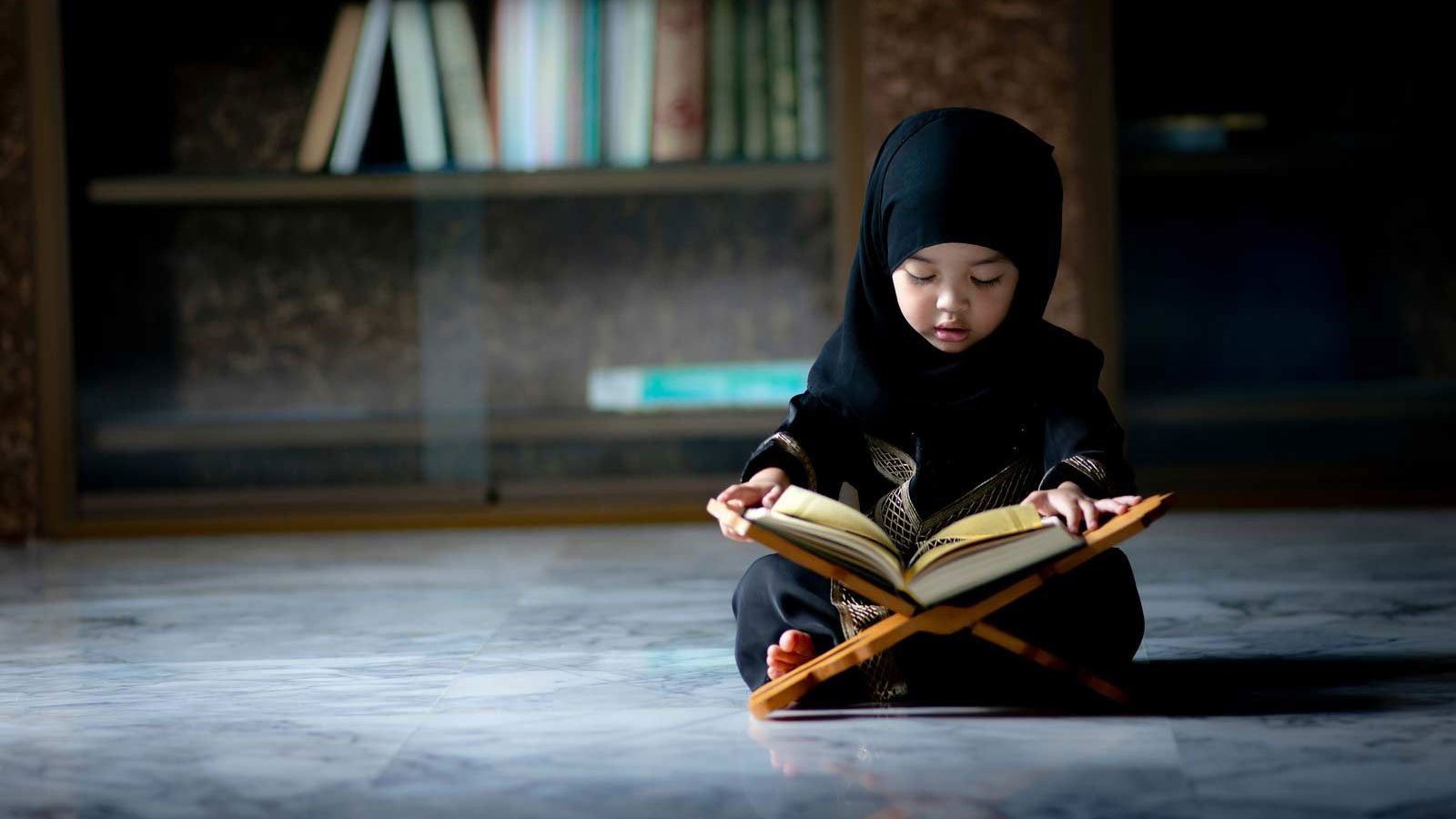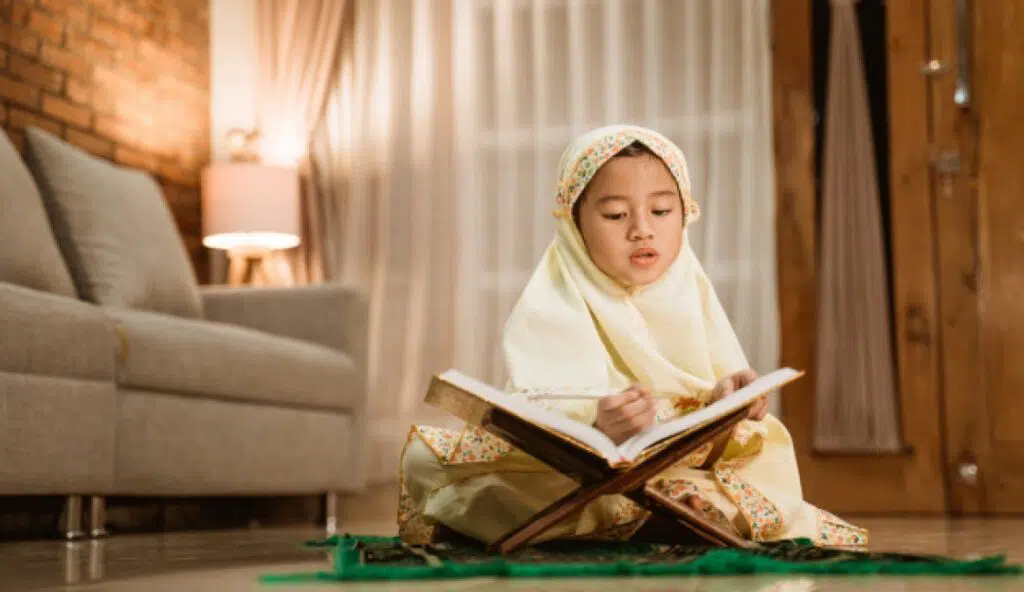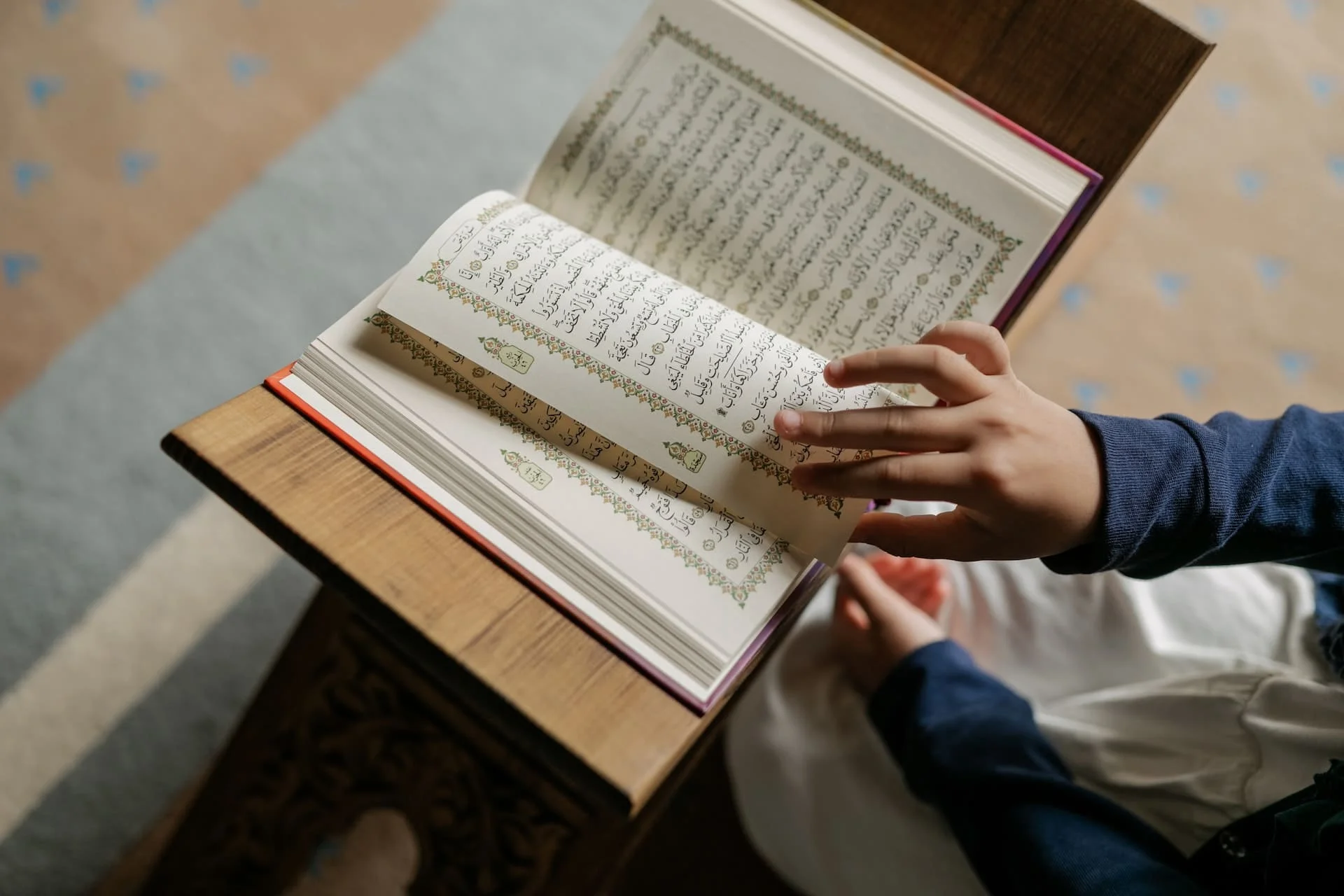
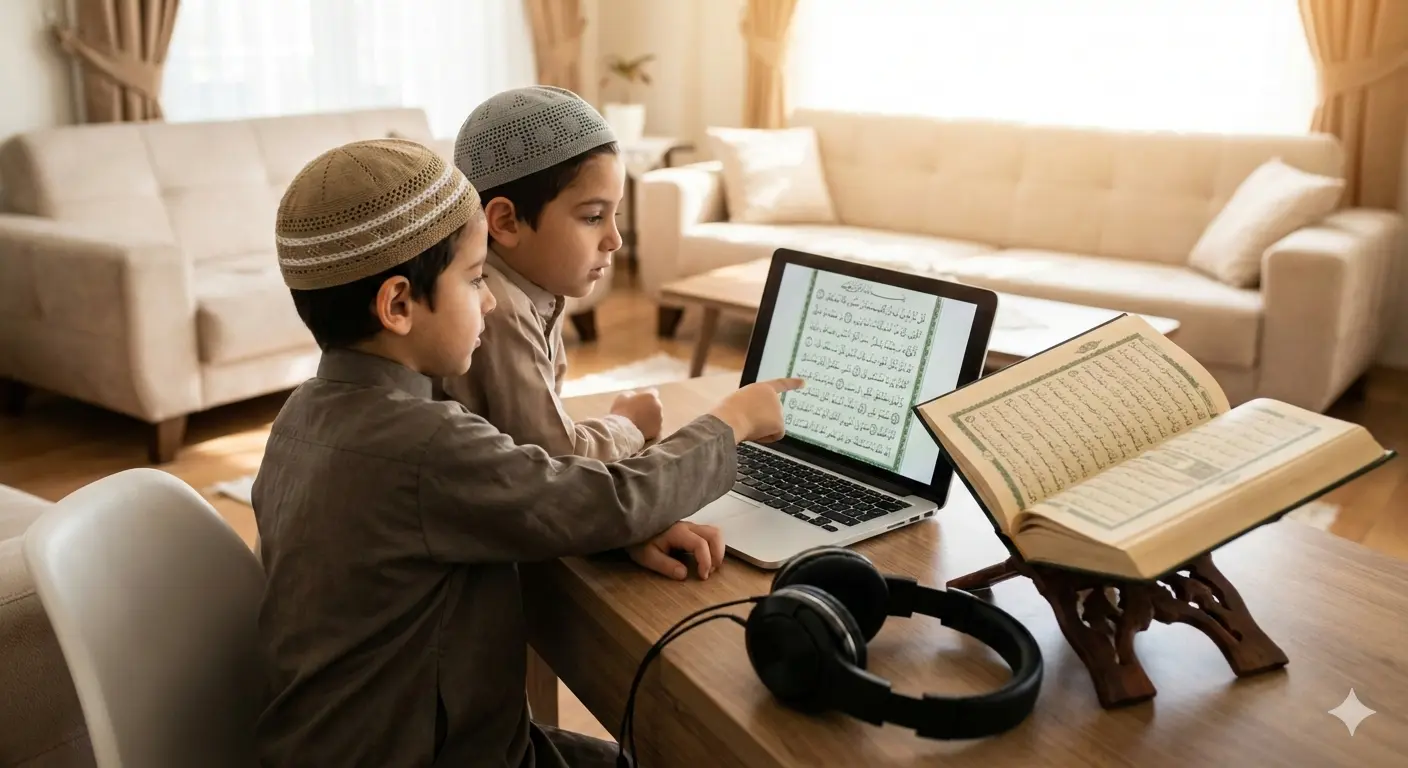
Online Tajweed classes for kids at Buruj Academy use sound-first teaching methods that train young ears before introducing Tajweed rules. Children aged 4–12 develop proper Makharij through playful repetition, visual associations, and age-appropriate pacing that respects cognitive development stages rather than rushing toward performance milestones.
Most children don’t struggle with Tajweed because it’s complicated. They struggle because they’re taught like miniature adults—rules before recognition, accuracy before comfort. Buruj Academy’s Tajweed course for kids reverses this sequence: listening comes first, mimicking second, naming the rule third. This approach mirrors how children naturally acquire language, making Quranic recitation feel intuitive rather than intimidating.
Transform from a complete beginner to a confident Quran reader
Tajweed for kids at Buruj Academy begin with sound discrimination exercises that make Makharij differences audible before they’re explained. Children practice letter articulation through interactive games, Noorani Qaida progression, and recorded recitation playback that builds self-awareness. The curriculum covers foundational Tajweed rules through stories, songs, and visual cues designed specifically for young learners’ attention spans.
Lessons run 20–30 minutes maximum because children’s focus operates in short cycles. Buruj Academy’s instructors use this constraint strategically: one clear concept per session, practiced multiple ways, then reinforced through homework that feels like play. No child sits through 45-minute rule lectures. Every Tajweed principle emerges through doing, not listening.
Online Tajweed classes for kids build Quranic recitation proficiency through gradual skill layering that matches developmental readiness. Children don't memorize charts—they internalize sounds through consistent, patient practice.
Children learn to distinguish ح from ه, ص from س, and ق from ك through repetition games that isolate each letter’s unique articulation point. Buruj Academy’s curriculum introduces Makharij clusters (throat letters, tongue letters, lip letters) using color-coded visuals and audio drills.
Buruj Academy’s Tajweed course for kids uses Noorani Qaida as the structured pathway from Arabic alphabet recognition to full Quranic recitation. Each lesson connects letter shapes to their sounds through tracing activities, pronunciation drills, and short word combinations. Children advance only when ready—not when the calendar says so.
Kids learn Qalqalah (the bouncing sound) by imagining letters that “jump.” They practice Madd (elongation) by stretching their arms while vocalizing long vowels. Buruj Academy’s instructors translate abstract Tajweed concepts into concrete actions children can see and feel. Rules like Idgham and Iqlab arrive late in the curriculum, after months of applied practice make them recognizable patterns rather than foreign terms.
Children at Buruj Academy record themselves reciting short Surahs, then listen alongside their teacher who highlights improvements before corrections. This playback method reduces performance anxiety—mistakes become learning moments, not failures. Young students develop internal monitoring skills: they start catching their own Makharij errors before the teacher points them out, building self-sufficiency that accelerates long-term Tajweed mastery.
Watch real testimonials from students who transformed their Quranic journey with us
Buruj Academy's online Tajweed classes for kids combine expert instruction with age-appropriate methods that make learning feel natural, not stressful.
Quran Tajweed for children at Buruj Academy produces measurable recitation improvements within 8–12 weeks of consistent practice. These outcomes reflect realistic developmental progress, not inflated promises.
Children articulate throat letters (ح، خ، ع، غ، ه، ء) without substituting English equivalents like "h" or "kh." They pronounce emphatic letters (ص، ض، ط، ظ) with proper heaviness, distinguishing them from their lighter counterparts. Buruj Academy's instructors drill these distinctions until they become automatic reflexes. Young students stop thinking about where their tongue sits—it just goes there. This muscle memory forms through hundreds of repetitions spread across weeks, not crammed into days.
Kids move from hesitant, choppy recitation to smooth, connected reading as they internalize Harakah patterns (Fatha, Kasra, Damma). They recognize Sukoon, Shadda, and Tanween marks instantly, applying correct sounds without pausing to decode. Buruj Academy's Tajweed classes for kids measure fluency not by speed but by comfort. A child who reads Surah Al-Fil slowly but accurately has achieved more than one who races through Al-Kawthar with uncorrected errors.
Young students begin noticing when they've skipped a Madd or rushed through Qalqalah. They rewind and fix errors without prompting, demonstrating internalized Tajweed awareness that extends beyond teacher supervision. Buruj Academy's curriculum builds this skill deliberately through recorded practice and gentle questioning: "Did that sound right to you?" Children learn to trust their trained ears, developing lifelong Quranic recitation independence.
Children at Buruj Academy practice 20–30 minutes daily using gamified homework that tracks streaks and unlocks rewards. This consistency matters more than intensity—irregular hour-long sessions can't replicate the retention power of brief, daily engagement. Parents report their children voluntarily opening the Mushaf outside lesson times, a behavioral shift Buruj Academy's instructors cultivate by making Quran reading feel rewarding rather than obligatory.
Kids transition from silent followers to vocal participants during family prayers. They volunteer to recite at weekend Islamic school programs, demonstrating Tajweed proficiency that reflects well-trained fundamentals. Buruj Academy's Tajweed course for kids prioritizes this real-world application over classroom performance. If a child reads beautifully during lessons but freezes during Salah, the teaching approach adjusts to address confidence barriers, not just technical skills.
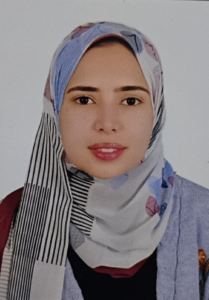
Learn from qualified native Arab scholars with years of teaching experience
Qur’an & Tajweed Teacher (English Medium)
English Major (B2) | Tajweed Instructor for Kids & Adults | Noor Al-Bayan Certified | Interactive Online Teaching
Qur’an & Arabic Teacher (English Medium)
4+ years experience | Hafidh | Tajweed & Arabic for Kids and Women | English Medium
Qur’an, Arabic & Islamic Studies Teacher for Non-Native Speakers
Hafidhah | Languages Graduate with Honors | 1,000+ teaching hours | Teaching Kids (6+), Teens & Women
Real transformations from students who mastered the Quran with our courses
Buruj Academy’s online Tajweed classes for kids provide the structured, patient instruction children need to develop proper Quranic recitation from their earliest learning years.
Buruj Academy's Tajweed classes for kids combine Al-Azhar-trained instructors, child-specific pedagogy, and a teaching system designed explicitly for English-speaking children's developmental needs.
Buruj Academy's instructors hold Ijazah in Quranic recitation and complete mandatory training in age-appropriate teaching methods before working with young students. They understand that a 5-year-old's attention span differs drastically from a 10-year-old's, adjusting lesson structure accordingly.
Children aged 4–6 use picture-based Noorani Qaida with animal associations for each letter. Ages 7–9 progress to color-coded Tajweed charts that categorize rules visually. Ages 10–12 begin transitioning to text-based rule explanations alongside continued auditory practice.
Buruj Academy developed proprietary Makharij matching games, Tajweed rule quizzes with cartoon characters, and pronunciation challenges that award points for accuracy. Children compete against their previous scores, not other students, reducing comparison anxiety while maintaining motivation.
Parents book lessons around school schedules, extracurriculars, and family commitments. Buruj Academy offers weekend slots, after-school times, and even early morning sessions for families managing multiple time zones or non-traditional schedules.
Some children master Noorani Qaida in four months; others need eight. Buruj Academy's instructors adjust pacing based on demonstrated mastery, not arbitrary timelines. If a child struggles with a specific Makharij point, the teacher adds targeted drills—no child is pushed forward before they're ready.
Monthly tuition for Buruj Academy's Tajweed course for kids starts at rates accessible to single-income families, with sibling discounts and payment plans available. Quality Tajweed instruction shouldn't require financial strain—Buruj Academy structures pricing to serve committed families, not just affluent ones.
Enrol your child in Buruj Academy’s online Tajweed classes for kids and watch them develop proper Quranic pronunciation through expert instruction and child-friendly teaching methods.
✓ Cancel anytime · ✓ No hidden fees · ✓ 100% satisfaction guarantee
Common questions parents ask about Buruj Academy's Tajweed classes for kids, answered clearly and directly.