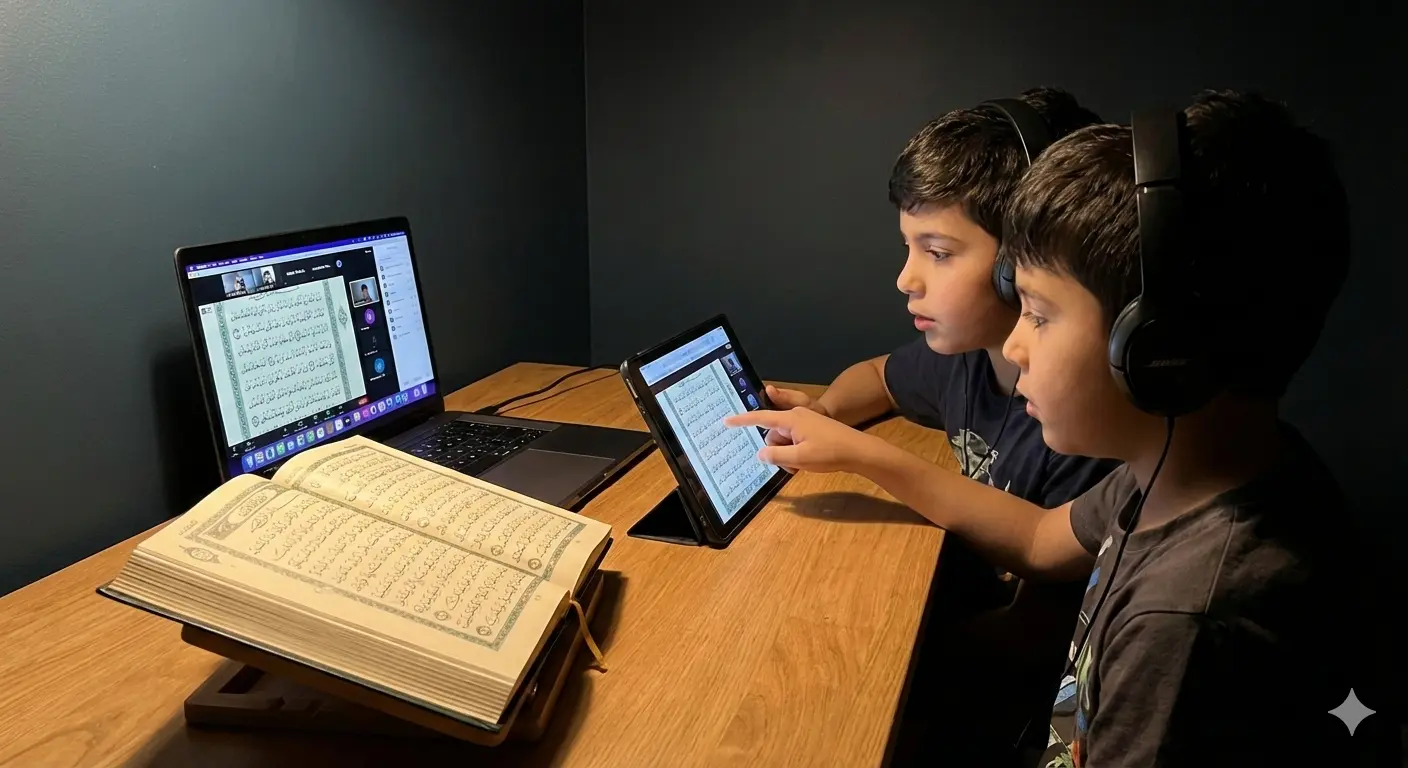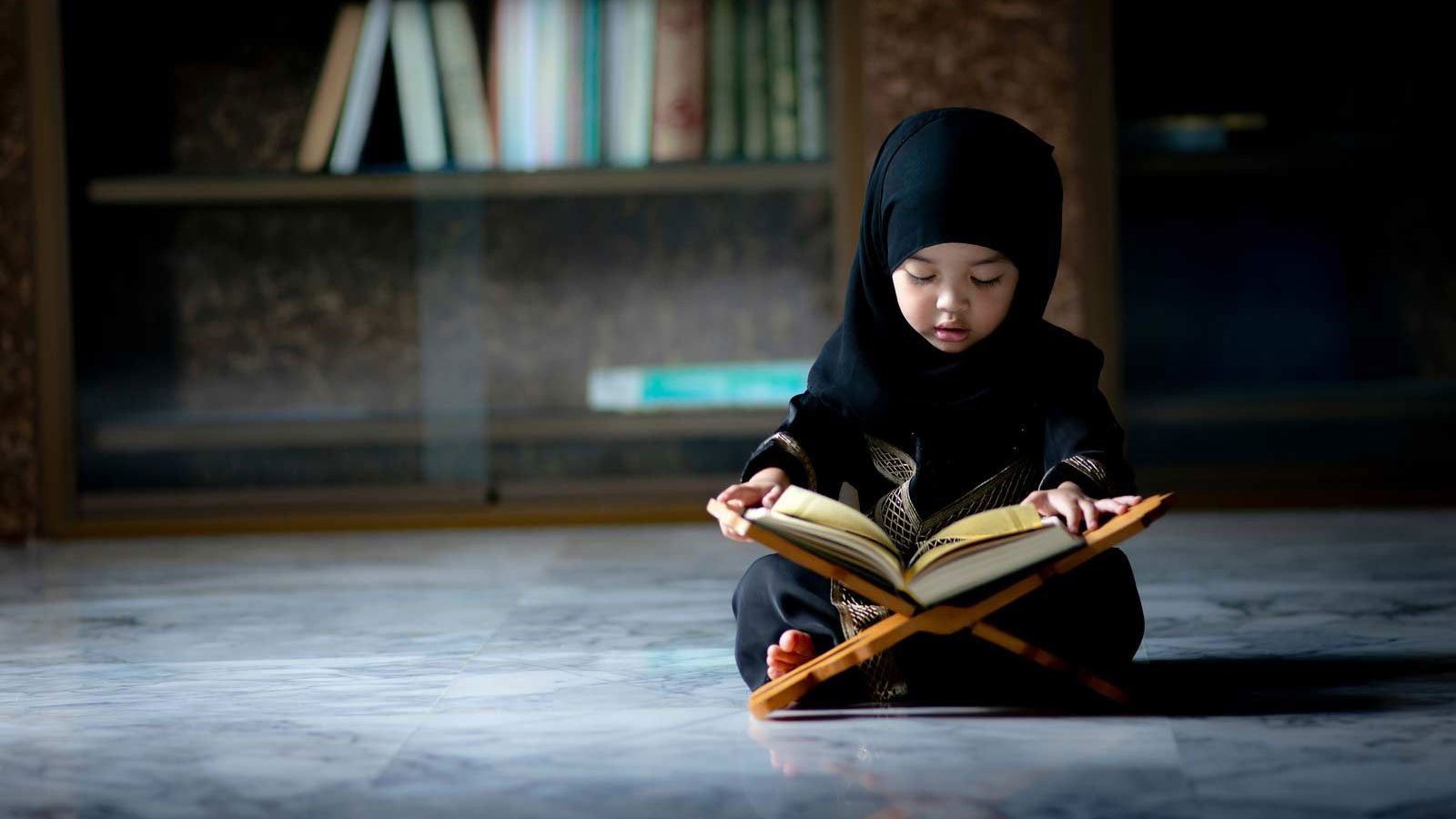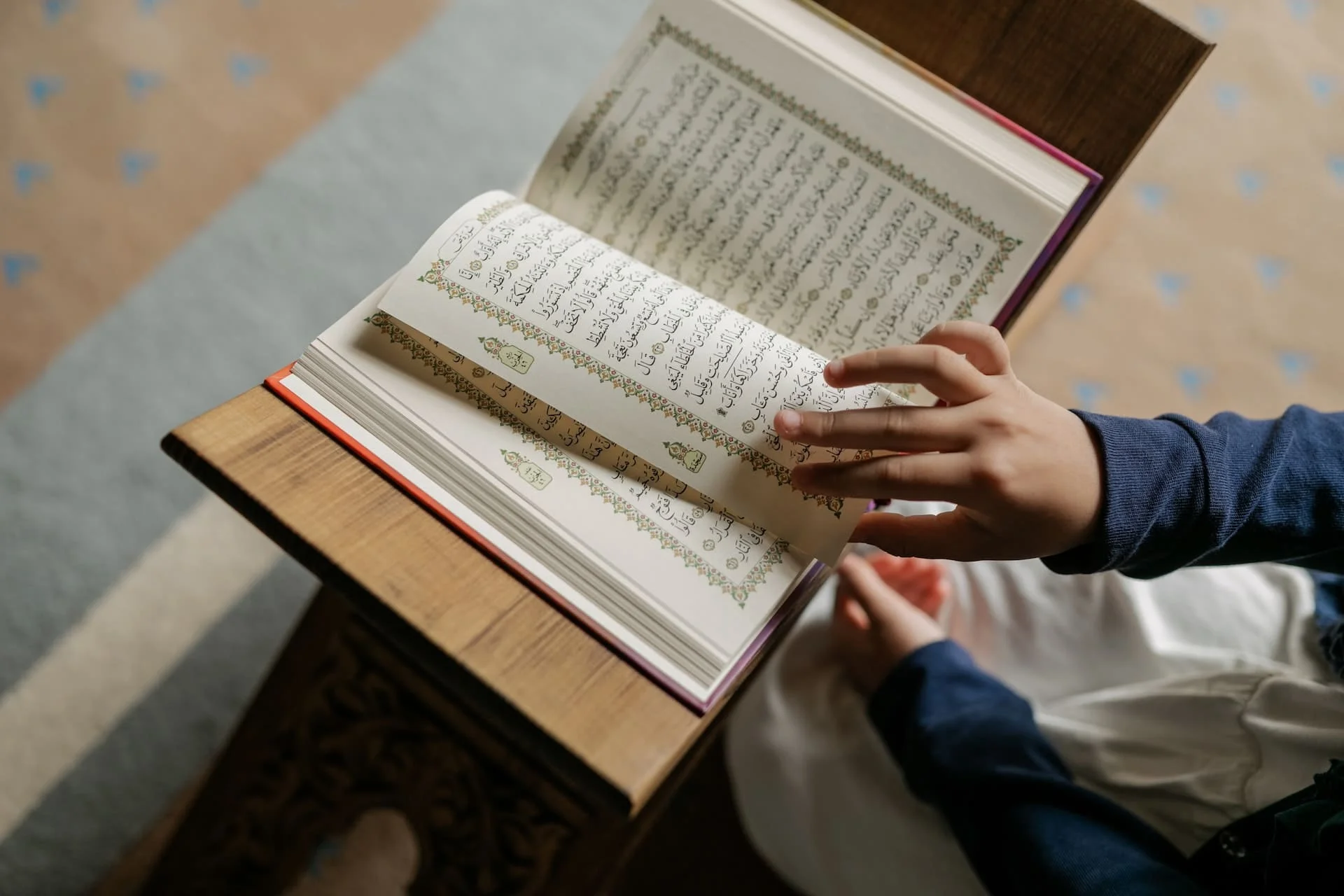
Students enrolling in the Quran Recitation Course at Buruj Academy often arrive with the same goal: to read Allah’s words fluently. Most English speakers recognize Arabic letters and pronounce words, yet sound nothing like their Quran teacher or any Qari’. The gap isn’t effort. It’s method. Quran recitation isn’t reading aloud. It’s the controlled application of Tajweed rules, breath management, and Makharij precision—skills that require systematic training, not repetition.
Buruj Academy’s Quran Recitation Course doesn’t start with performance. It starts with sound. Students learn to hear the difference between ص and س before naming the rule. They practice one Makharij point for three lessons if needed. Buruj Academy’s Azhari tutors don’t rush to long Surahs—they build the neurological pathways that make Tajweed-compliant recitation instinctive, not forced.
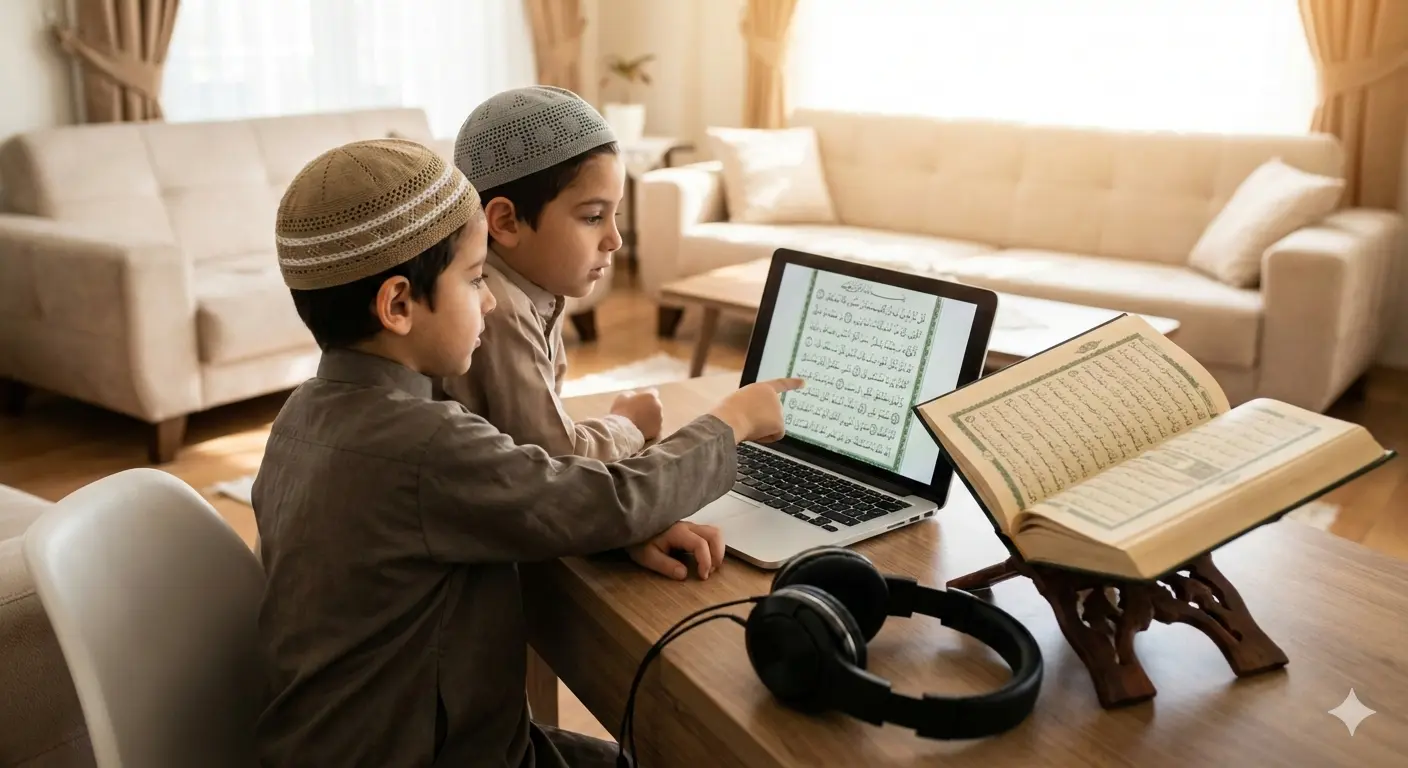
Transform from a complete beginner to a confident Quran reader
Buruj Academy’s Quran Recitation Course teaches English-speaking students how to recite the Quran with Tajweed accuracy through a progression system that moves from sound recognition to rule application. Students work through Makharij training, then Sifaat (characteristics of letters), then the major Tajweed categories: Noon Saakinah rules, Meem Saakinah rules, Madd, Qalqalah, and beyond. Lessons are one-on-one, paced individually, and adjusted weekly based on performance.
This isn’t a memorization track. It’s a recitation proficiency program. Buruj Academy’s students learn to open any page of the Quran and read it correctly—not from memory, but through internalized Tajweed application. Buruj Academy’s curriculum builds fluency gradually: accurate letter pronunciation first, then word-level Tajweed, then sentence-level flow, then passage-level rhythm. Each stage is tested before progression.
Students in Buruj Academy's Quran Recitation Course move through four foundational skill areas, each containing multiple sub-lessons and practice modules. This isn't surface-level exposure. It's deep training in the mechanics of Quranic recitation.
English speakers don’t struggle with all 28 Arabic letters—they struggle with nine: ح، خ، ص، ض، ط، ظ، ع، غ، ق. Buruj Academy’s curriculum isolates these sounds early and drills them through minimal pair exercises. Students practice ح versus ه for entire sessions, hearing the glottal distinction until they can produce it without visual cues. This isn’t alphabet review. It’s phonetic retraining.
Most students learn Tajweed rules as lists. Buruj Academy’s instructors teach them as decision trees. When a student sees ن with sukoon, they learn to scan ahead: Is the next letter from the throat? Nasal? Lips? The rule follows automatically. Lessons cover Idhaar, Idghaam, Iqlaab, and Ikhfaa—not as theory, but as real-time reading choices. By month three, students apply these rules without conscious effort.
Qalqalah sounds forced when students “bounce” the letter. Buruj Academy’s method teaches the subtle stop-and-release that makes ق، ط، ب، ج، د echo naturally. Students practice in isolation first, then embedded in words, then at verse endings where Qalqalah interacts with Waqf rules. Ghunnah timing is taught through counted beats—not “a little nasal sound,” but exactly two counts held at the nasal passage.
Stopping mid-verse changes meaning. Buruj Academy’s Quran Recitation Course dedicates entire lessons to Waqf symbols: where you must stop, where you may stop, where stopping is discouraged. Students learn to plan breath points before reciting—treating each verse like a musical phrase. They practice starting mid-verse (Ibtida) without distorting grammar. These aren’t minor details. They’re what separates choppy reading from fluent recitation.
Watch real testimonials from students who transformed their Quranic journey with us
Buruj Academy's Quran Recitation Course offers one-on-one lessons with Al-Azhar-trained teachers who specialize in teaching English-speaking adults. Sessions are live, recorded for review, and scheduled flexibly across all time zones.
Students who complete Buruj Academy's Quran Recitation Course don't just read better—they develop self-correction ability, which is the only sustainable skill. Here's what that looks like in practice.
Fluency means opening Surah Al-Baqarah, Al-Kahf, or Yasin and reading it correctly on sight. Buruj Academy's curriculum builds this through systematic exposure to Quranic vocabulary patterns, phrase structures, and Tajweed rule combinations. Students practice reading unfamiliar passages weekly. By month six, most students can pick up the Mushaf and recite without hesitation. The speed varies—some read slowly with high accuracy, others faster with occasional self-correction. Both are valid outcomes. The goal is independence, not performance.
Self-correction is taught explicitly. Buruj Academy's instructors pause lessons mid-recitation and ask: "Did you hear the mistake?" Most students did—they just didn't know what was wrong. Teachers train the diagnostic process: Was it Makharij? Madd length? A Ghunnah rule? Students learn to name their own errors. This skill transfers to independent practice. Students record themselves, listen back, and mark errors before the next lesson. Buruj Academy's method builds internal Tajweed awareness, which is more valuable than external correction.
Salah recitation has different requirements than study recitation. It must be memorized, accurate, and delivered with proper Tarteel (measured pacing). Buruj Academy's Quran Recitation Course includes a Salah-focused module where students perfect Al-Fatihah and common Surahs used in daily prayers. Teachers test for speed, clarity, and rule application under "performance conditions"—simulating the mental state of standing in prayer. Students practice reciting while standing, with breath control strategies for longer Qawmah positions.
Waqf isn't intuitive for English speakers. Buruj Academy's instructors teach it through meaning-first analysis: stopping here changes the sentence into a question; stopping there creates a grammatical error. Students annotate their Mushaf with planned stop points before reciting passages. Advanced students learn the difference between Waqf Lazim (required stop), Waqf Jaiz (permissible), and Waqf Mamnoo' (forbidden stop). This turns recitation into an interpretive act—students understand why they're pausing, not just where.
Habit formation is embedded in Buruj Academy's curriculum. Teachers assign daily recitation targets—not time-based ("recite for 20 minutes") but portion-based ("recite half a page"). Students submit weekly recordings. Teachers track consistency, not perfection. Many adults enter the course reading Quran once a week. By month four, most have established a post-Fajr or pre-sleep routine. The course provides accountability structures that make daily recitation the default, not the exception.
Learn from qualified native Arab scholars with years of teaching experience
Qur’an, Arabic & English Teacher
2,600+ teaching hours | Teaching Qur’an & Tajweed simply | Arabic & English Instructor | Kids & Adults
Qur’an & Arabic Teacher for Non-Native Speakers
3 years experience | Ijazah in Hafs, Shu‘bah & Warsh | 2,500+ teaching hours | Tajweed & Arabic Foundations
Qur’an Tutor | Multiple Ijazah Holder | Special Needs Specialist
4,500+ Teaching Hours | Ijazah in Hafs, Ibn ‘Amer & Abu ‘Amr | Teaching Arabs & Non-Native Speakers | 7+ Years Experience
Real transformations from students who mastered the Quran with our courses
Buruj Academy’s Quran Recitation Course combines live instruction, personalized pacing, and Tajweed drills designed specifically for English-speaking adults who want to recite the Quran correctly and independently.
Buruj Academy isn't the largest online Quran academy. It's the most methodical. Here's what that means in practice.
Buruj Academy's instructors hold Ijazah in Hafs 'an Asim and have completed specialized training in teaching adult learners. Adults don't learn like children—they need logical explanations before repetition works. Teachers explain why ط is pronounced with tongue elevation, not just that it is. This cognitive scaffolding accelerates adult progress.
Buruj Academy's curriculum offers three starting tracks: absolute beginner (starts with Noorani Qaida), intermediate (skips alphabet, starts with Tajweed rules), and advanced (focuses on fluency and Tarteel refinement). Students are placed through a free diagnostic session.
Buruj Academy offers only private lessons, where every second is focused on the individual student's specific challenges. Teachers correct in real time, replay errors, and demonstrate correct articulation until the student hears and reproduces it.
Buruj Academy operates across all time zones with teachers available mornings, afternoons, evenings, and weekends. Lessons are 30, 45, or 60 minutes based on the student's attention capacity. Adults juggling careers and families can reschedule up to 24 hours in advance without penalty.
Students receive monthly progress reports detailing: Makharij accuracy percentage, Tajweed rule application consistency, reading fluency (words per minute), and self-correction ability. These aren't subjective evaluations—they're based on recorded recitation samples analyzed by teachers.
Buruj Academy offers pay-per-lesson and monthly subscription models. Packages range from two lessons per week (budget-conscious) to five lessons per week (accelerated progress). Students can pause and resume without losing their instructor or progress records.
Buruj Academy’s Quran Recitation Course gives English-speaking adults the structured training needed to recite the Quran with Tajweed accuracy, confidence, and independence. Start with a free diagnostic session.
✓ Cancel anytime · ✓ No hidden fees · ✓ 100% satisfaction guarantee
Prospective students often have questions about the method and commitment. Here are honest answers regarding Buruj Academy's approach to helping you learn Quran recitation online.